
When I made carbonara for the first time in my life as a middle school student, I made it for my family using heavy cream and garlic. My family was delighted and said it was delicious! So, I always assumed that was the “correct carbonara.”
However, when I was living in a share house abroad, an Italian housemate told me, “Heavy cream in carbonara? Garlic…? NO!” I was so surprised and ended up wondering what real carbonara actually was.
The Carbonara I Ate in Rome
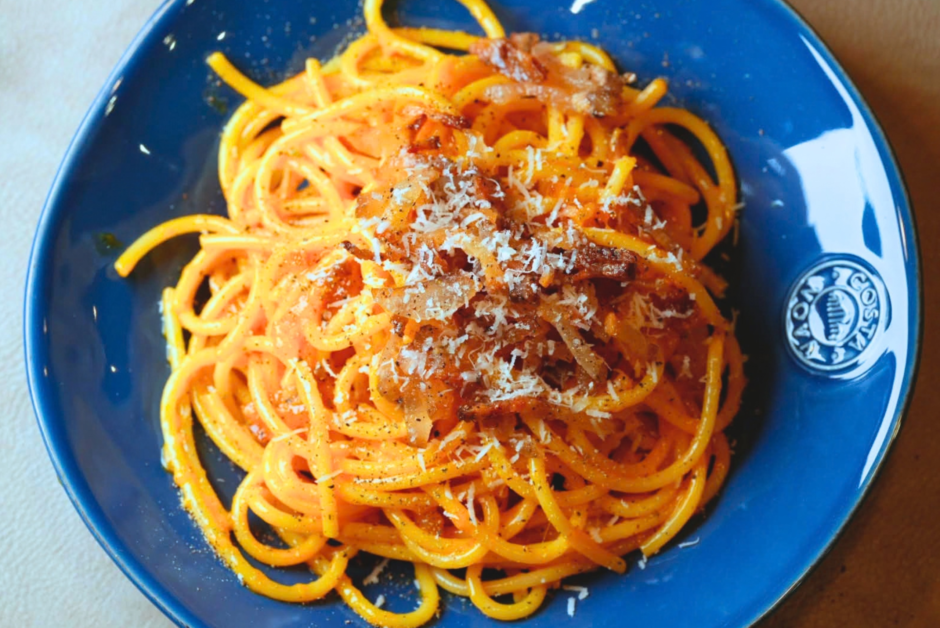
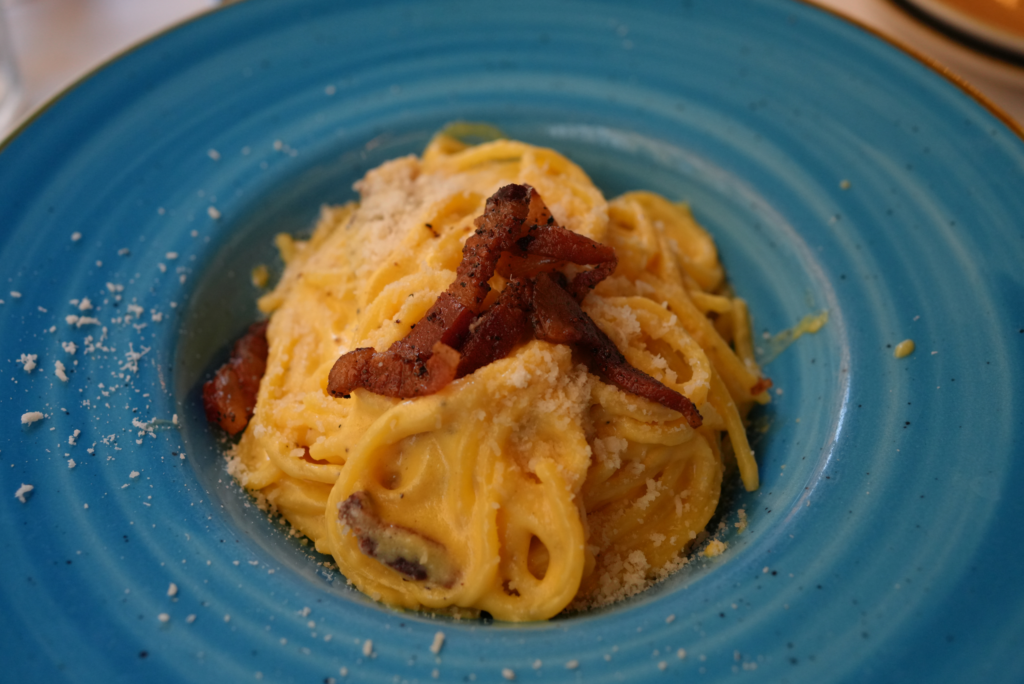
In June 2026, I finally went to my dream destination: Rome, Italy! The first carbonara I had there featured crispy guanciale (pork cheek) and was rich and incredibly delicious. The staff was so friendly that it almost brought tears to my eyes. After that experience, I ate carbonara almost every day during my stay.
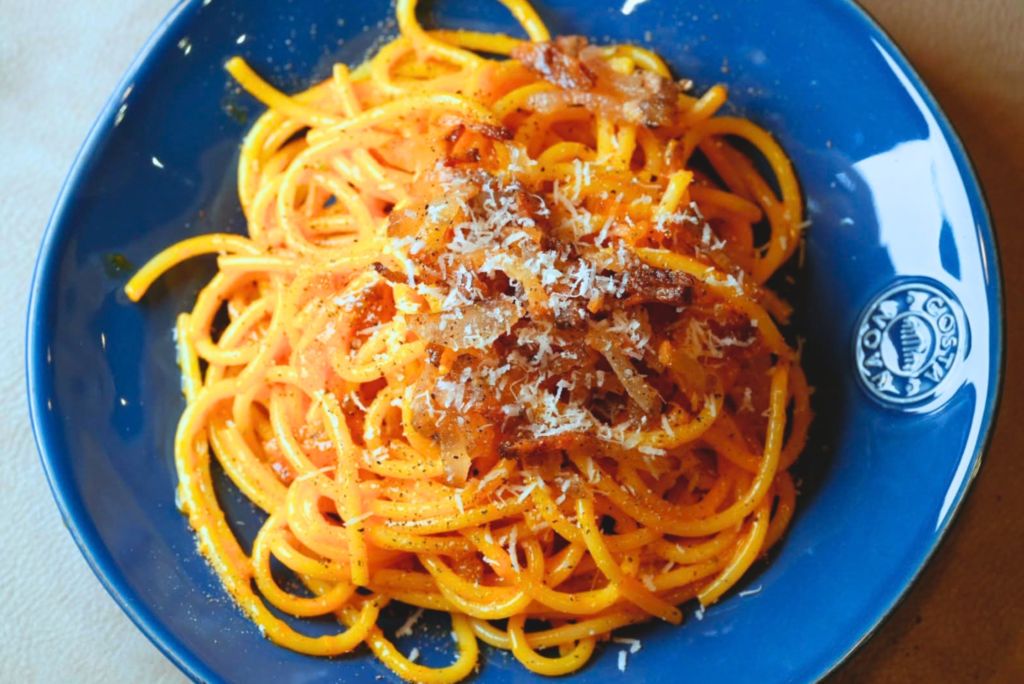
Here is the carbonara I had in Rome. It was fascinating to see how each restaurant varied slightly in terms of the size of the guanciale, the type of pasta, the cheese, and the saltiness. Personally, I fell in love with a slightly thicker pasta served with plenty of guanciale and a rich, salty flavor, which made me want to recreate it at home.
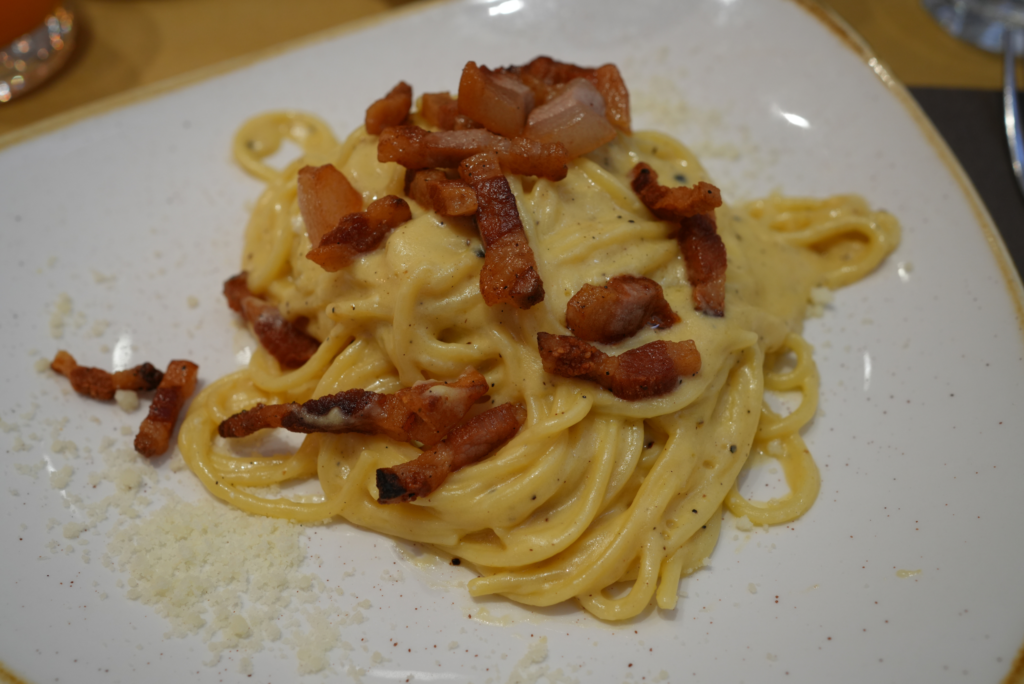
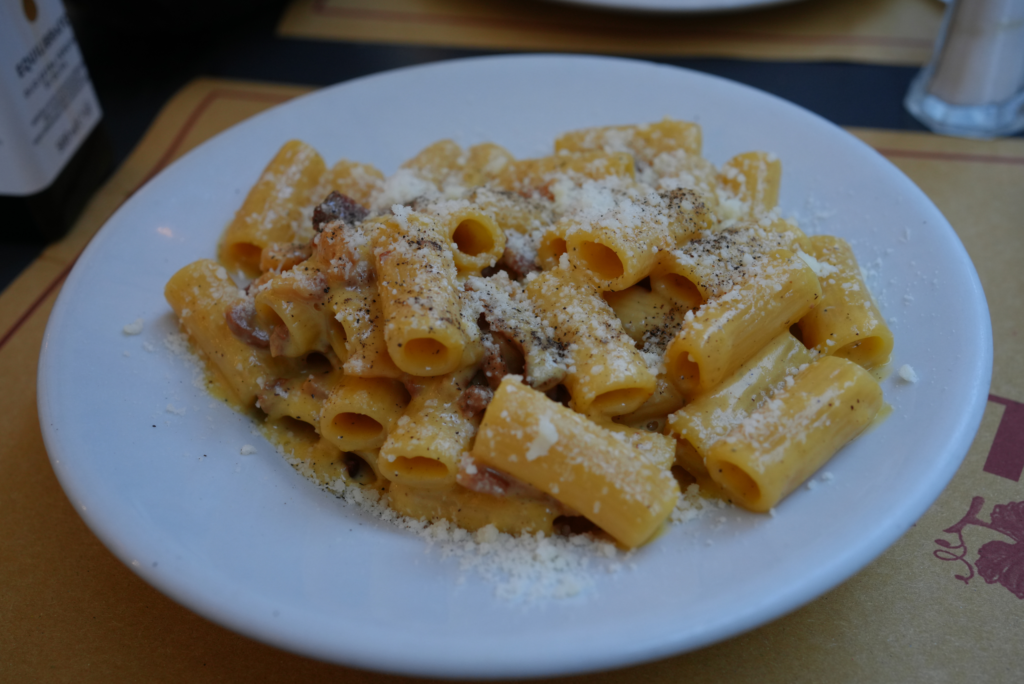
What are the ingredients for Roman carbonara?
In Japan, guanciale and Pecorino cheese are difficult to come by, which is likely why pancetta or bacon is often used instead. Restaurants in Rome listed their ingredients on the menu; while recipes differed by establishment, most frequently used guanciale, Pecorino cheese, and Parmesan cheese.
Where to buy authentic Italian ingredients?
I visited a store called Eataly in Nihonbashi, Tokyo (there’s also one at Tokyo Station!). Without a reservation, I was able to get my hands on the long-awaited guanciale and Pecorino cheese! The staff member was very kind and gave me detailed instructions on how long I could keep the guanciale after opening before freezing it.
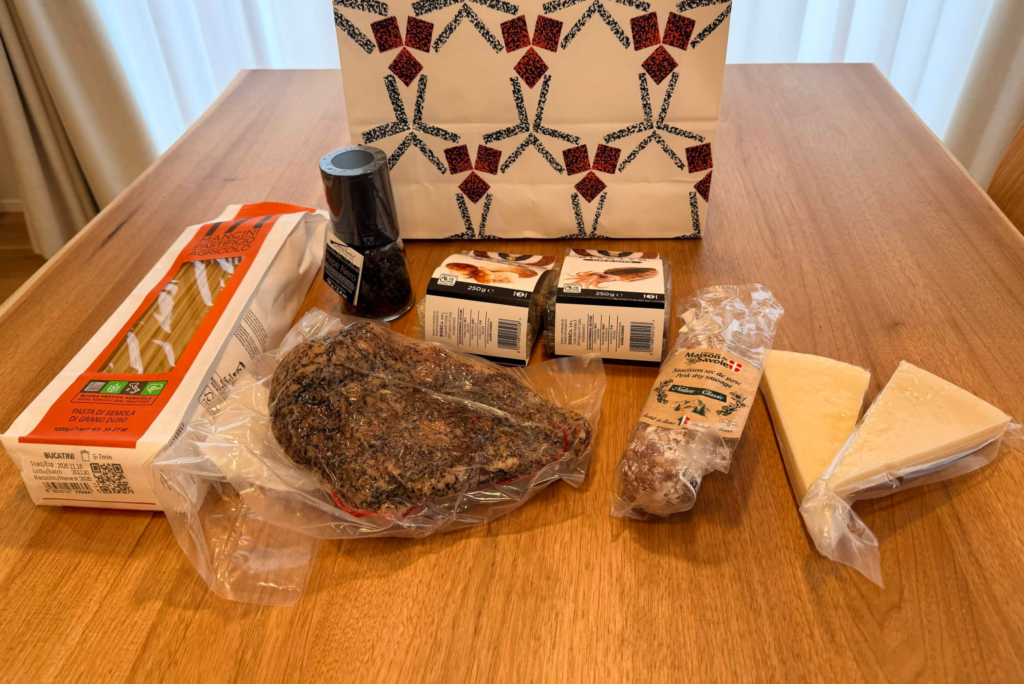
I purchased an extra-large 700g block of guanciale. Following the staff’s recommendation, I cut it into small, carbonara-ready pieces (0.5 cm to 1 cm) and froze them in 80g portions. (You can fry them directly without thawing!) I keep the Pecorino cheese in the refrigerator, stored inside a Ziploc bag to prevent it from drying out.
This 100g thicker pasta made from semolina flour was also delicious (such as MANCINI PASTIFICIO’s Bucatini or Eataly’s store-brand Bucatini).
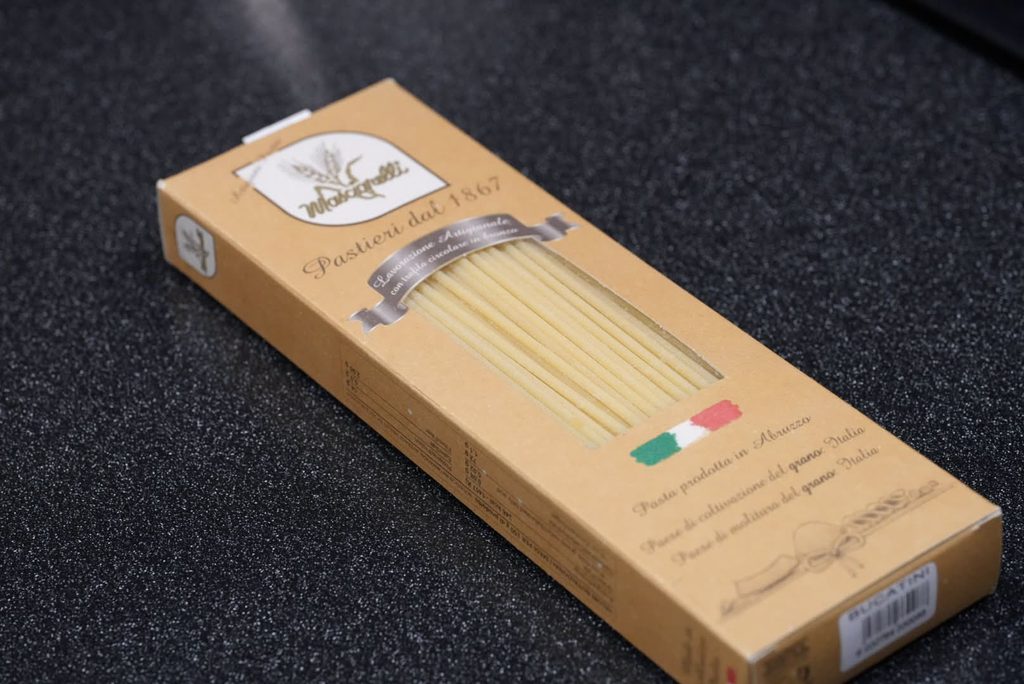
What is Bucatini?
Bucatini is a tubed pasta made of hard durum wheat flour and water. Its length is 25–30 cm (10–12 in) with a 3 mm (1⁄8 in) diameter. The average cooking time is nine minutes.
wikipedia
While it’s thick, chewy, and truly delicious, boiling it according to the package instructions leaves it a bit too firm for my taste, so I sample it while cooking to reach my preferred texture.
Black pepper flavor is essential!
Because carbonara uses so few ingredients, I think it is a very delicate dish.
Freshly grinding black pepper with a mill brings out a rich aroma that drastically improves the flavor.
Ingredients
| Thick spaghetti | 200g |
| Guanciale | 80g |
| Egg yolks | 4 |
| Pecorino cheese | 40g |
| Black pepper | To taste (I prefer a generous amount) |
| Salt | Generous amount for boiling the pasta (approx. 1/2 tablespoon in a large pot) |
How to Make
1⃣ Preparation
Slice the guanciale into pieces about 0.5 to 1 cm thick. Grate the Pecorino cheese.
(Note: Guanciale contains a lot of fat and becomes translucent when heated, but that is completely normal!)
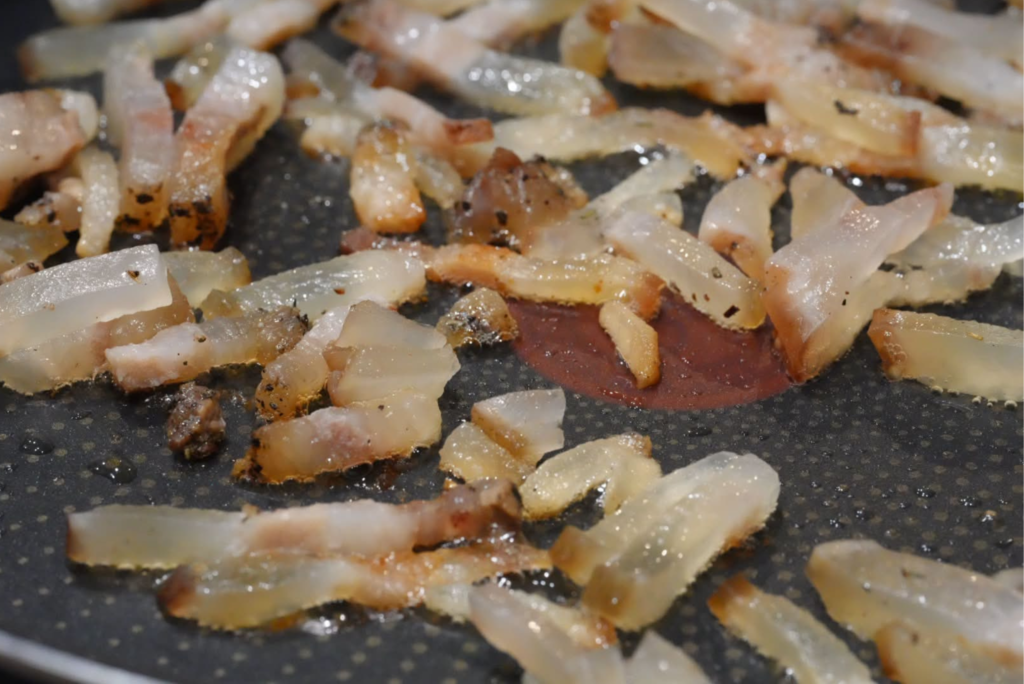
2⃣ Sauté the Guanciale
Sauté the guanciale over low to medium heat for about 15 minutes. Adjust the heat as needed until it becomes crispy.
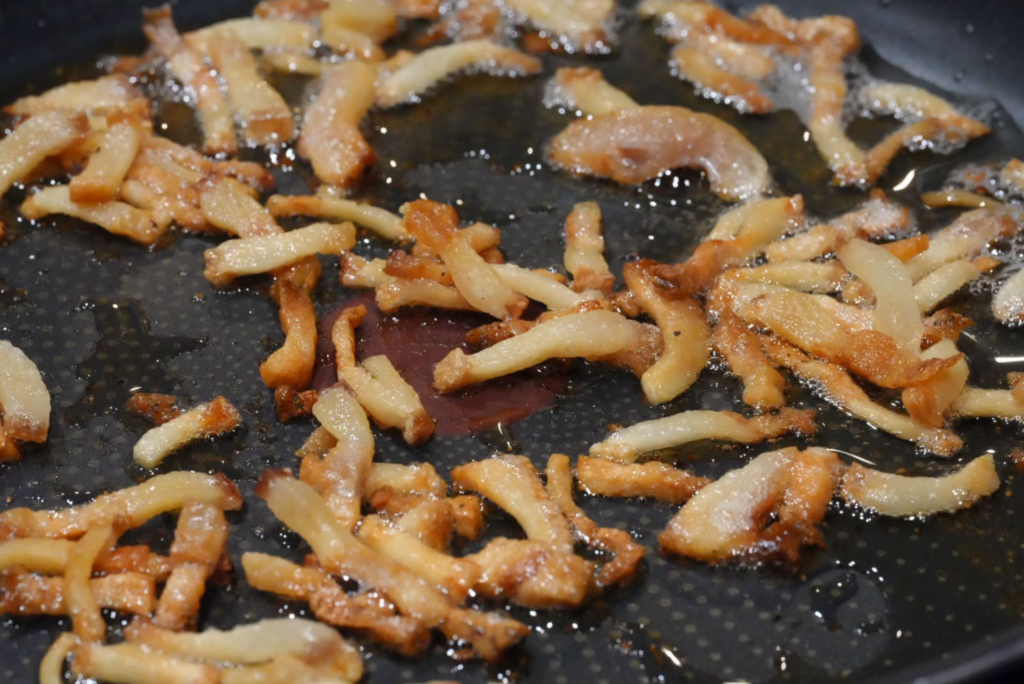
3⃣ Mix Egg Yolks and Cheese
In a bowl, mix the 4 egg yolks with the grated Pecorino cheese.
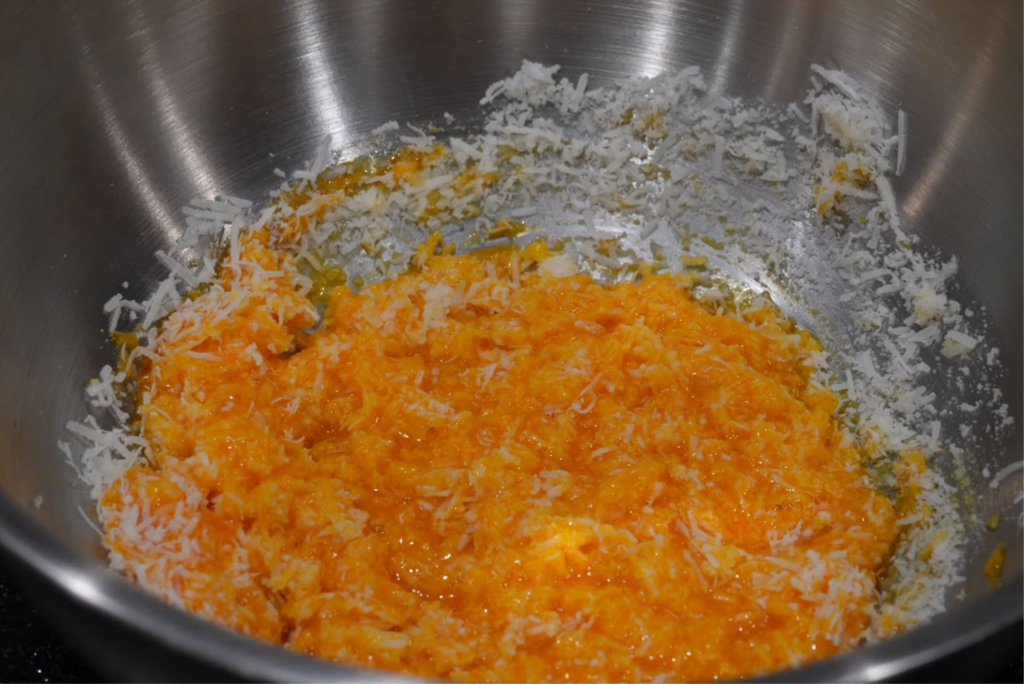
4⃣ Boil the Pasta
Add a generous amount of salt to boiling water and cook the pasta.
5⃣ Combine Pasta and Sauce
Add the guanciale along with its rendered fat, black pepper, and cooked pasta into the bowl containing the egg yolk and cheese mixture. Toss everything together. Add just a tiny splash of pasta cooking water.
(Tip: Pre-warming the bowl and plates with hot water keeps the eggs from cooling down the pasta.)
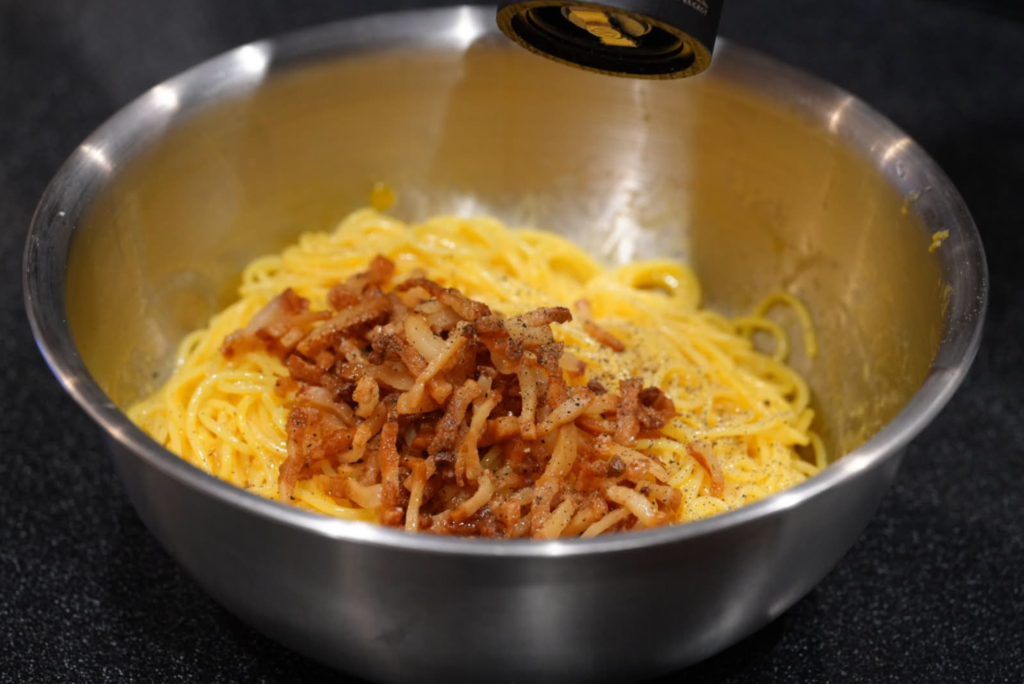
6⃣ Finishing Touches
Plate the pasta, then top with extra black pepper and additional cheese.
(It is especially delicious when you add plenty of freshly milled black pepper!)
Memories of Italy
During my trip to Italy, I visited Rome, Naples, and Capri! I had read in various places to watch out for pickpockets and was worried about safety, but nothing was stolen, no issues occurred, and it was a thoroughly enjoyable trip.
Wanting to learn at least a little Italian, I memorized Buongiorno for hello and Grazie for thank you, and used them every day at restaurants and shops. Perhaps appreciating the effort, restaurant staff who realized I was Japanese after I entered or while I was eating would approach me with friendly phrases in Japanese like “Oishii!” (Delicious!) or “Kanpai!” (Cheers!). They would ask, “Are you Japanese?” I felt that this unscripted, warm service was wonderful. The food everywhere was delicious, and exchanging warm smiles with elderly locals on the street made me feel so welcome that I wished I could stay longer. It was truly a memorable trip to Italy.

If this looks delicious to you, please share it on Twitter/X! I would be thrilled if you tagged me in your posts when you try making it!